


Discover the project: browse the digital folder or download.
The 1MICRON project aims to revolutionize medical imaging by developing a monolithic x-ray sensor with 1-micron spatial resolution using integrated CMOS electronics and edge-on deep silicon geometry. This high-efficiency sensor enhances phase contrast imaging and allows for real-time, in-surgery cancer margin assessment, potentially eliminating over 100,000 delayed treatments annually in Europe. The technology also opens new markets, including developing countries. A secondary goal is to demonstrate its use in future CT systems, enabling low-power, high-flux imaging and non-invasive “3D virtual biopsies.” The expert European team behind 1MICRON is poised to drive a major shift in pathology and clinical imaging.
Read more about how the new photon-counting CT technology was developed in Stockholm, which forms the basis of this project at the completed research programme: Spectral CT-imaging and Endovascular Techniques.
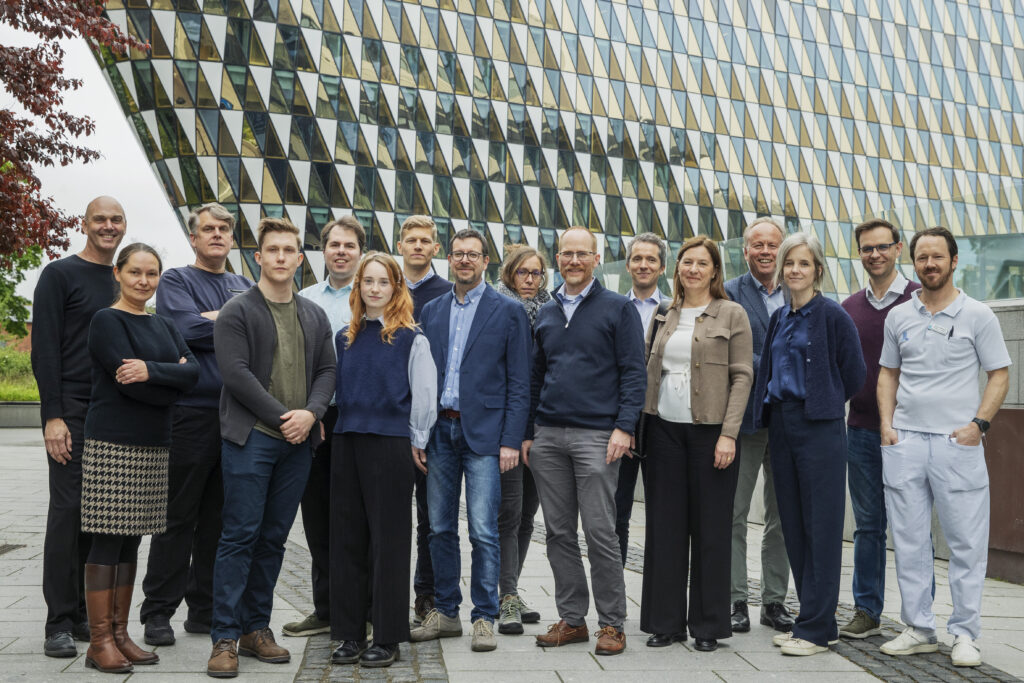
Team
PI´s
Mats Danielsson, KTH
Johan Hartman, Karolinska Institutet
Julia Herzen, TUM
Manuel Rolo, INFN- Instituto Nazionale di Fisica Nucleare
Lucio Pancheri, University of Trento
Anders Björklid, Prismatics Sensors AB
Project Management
Moa Yveborg Tamm, KTH
Public Relations and Communications
Johan Schuber, KTH, jschuber@kth.se, +46 705 510809
Deliverables
The 1MICRON project will deliver a set of key results that document progress and support impact across research, development, and application. These include technical reports, design specifications, experimental validation data, and prototype demonstrators.
Deliverables are aligned with the project’s work packages and track advancement from fundamental development to system integration and real-world validation. In addition, the project will produce dissemination and exploitation outputs to ensure that results are shared and taken forward beyond the project duration.
Public deliverables will be made available to promote transparency and knowledge sharing, while selected outputs may remain confidential to protect intellectual property and support future commercialization.
The project last from 1 March 2024 to 28 February 2029.

