


“In Sweden there seems to be a greater openness to collaboration, especially within clinical environments.”
MedTechLabs community of researchers is growing. Get to learn Valentina Quartieri, PhD student at KTH, Division of Material and Structural Mechanics, and part of MedTechLabs PI Christian Gassers group, where she focuses on developing computational models to improve the understanding of vascular diseases, particularly aneurysms and carotid artery disease.
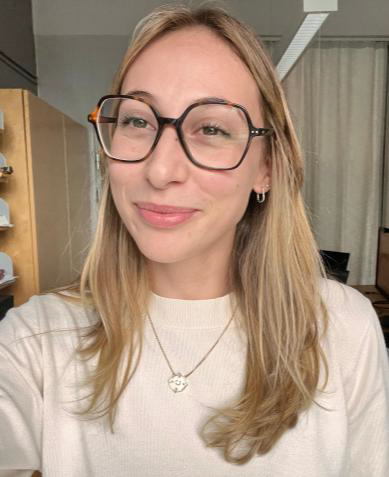
Hi Valentina, could you tell us about your background and how you ended up in Sweden?
“I chose Biomedical Engineering because I’ve always been motivated by the idea of contributing to people’s health through technology. I studied at Politecnico di Milano, where I completed both my bachelor’s and master’s degrees. During my master’s thesis, I realized I wanted to pursue a research career, so a PhD would be the natural next step. Since no positions were available at Politecnico di Milano, I began looking for opportunities both in Italy and abroad. Through a colleague, I came across the announcement for a PhD position in Christian Gasser’s group, which I immediately considered an exceptional opportunity to work in biomechanics under a highly respected supervisor. When I was selected, I accepted without hesitation. I had only visited Sweden once before, but I was drawn to the idea of working in an international environment and within a strong academic context. Even though moving from my family was not an easy decision, this represented a concrete chance to build the scientific career I aim for.”
What is your PhD project about? And how could it impact society?
“It focuses on developing computational models to improve our understanding of vascular diseases, particularly aneurysms and carotid artery disease. Although significant progress has been made in recent years, existing biomechanical models still do not fully capture the complex processes that drive disease progression or the risk of acute events. The aim is to identify biomechanical parameters that may help clinicians detect high-risk patients, for example, by predicting aneurysm growth or rupture risk, or by clarifying which morphological features of the carotid artery are associated with a higher likelihood of complications. I also explore machine-learning approaches to integrate clinical, geometric, and biomechanical data to create more comprehensive predictive tools. In the long term, I hope that this can support more personalised decision-making and contribute to earlier and more effective management of vascular diseases.”
Have you noticed any differences in research collaboration in Sweden vs. Italy?
“Although my experience in Italy was limited, I have noticed some clear differences. In Sweden, there is a greater openness to collaboration, especially within clinical environments. Communication is direct and informal, which makes it easier to initiate joint projects. In Italy, a more hierarchical structure of hospitals can make it harder for young researchers to establish contact with clinicians and build long-term collaborations. Here, on the other hand, I found it much easier to interact with doctors and involve them in research activities, and this has a very positive effect on interdisciplinary work. Of course, this is my personal perspective, but the difference became apparent from the very beginning.”
What has been important for you to get involved and participate in the interdisciplinary work at MedTechLabs?
“Being able to collaborate directly with clinicians and researchers is, in my view, one of the most valuable aspects of conducting research in the medical field. At MedTechLabs I have had the opportunity to get to know most of the team and I have found people who are highly dedicated, open and genuinely passionate about their work. Working in such an interdisciplinary environment makes it clear how clinical, biological and engineering perspectives complement each other and contribute to the same research question. This atmosphere is very motivating: it makes you want to engage, improve, and contribute to a project that truly feels shared.”
What are your plans? Will you stay in the academy, in Sweden, or what?
“My goal would be to continue in academia, as I enjoy contributing to research while developing my own scientific profile. Over the past years I’ve realised how much I appreciate the challenges and creativity that research involves. I would also be happy to stay in Sweden. I have found the academic environment here to be open, collaborative and very well organised and I feel that it would be a good place to continue growing professionally. Of course, the future is never entirely predictable, but this is what attracts me the most now.”
Also, we have heard that you really like pineapple on pizza?
“This is definitely the most challenging question of the interview! I love Sweden, but I’m Italian … so I still struggle to think of pineapple on pizza as real pizza. But I do appreciate the enthusiasm people here have for it! 😄”