


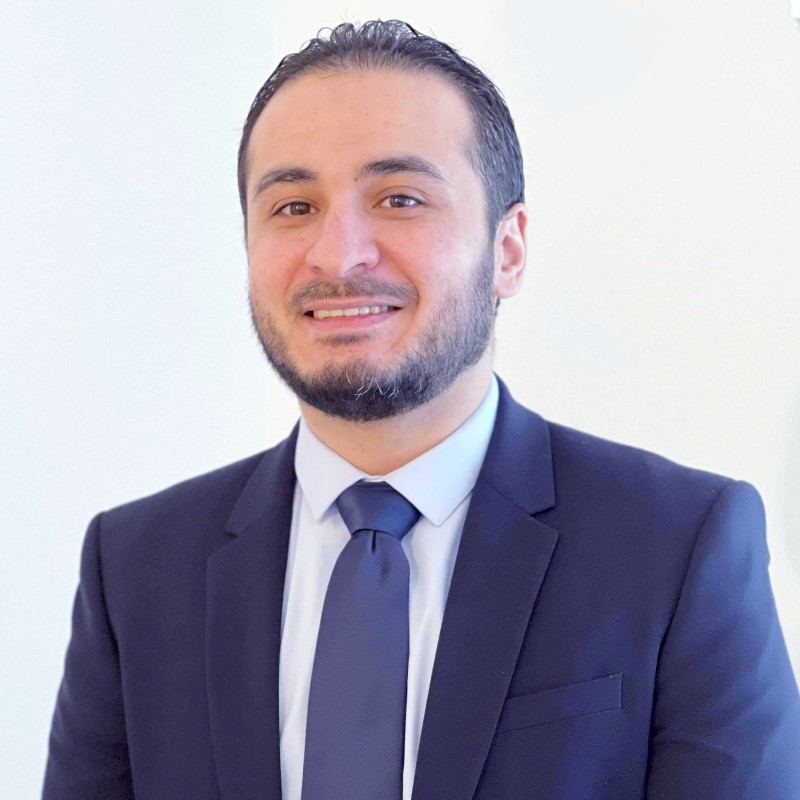
Ali Elshaari
Principal Investigator (PI) for the project “Imaging the Epileptic Brain using Multimodal Quantum Sensors”. Associate Professor of Applied Physics at KTH Royal Institute of Technology.
1. Hi Ali, what research do you do at MedTechLabs?
I lead the KTH team in a collaborative project between KTH and Karolinska Institutet called Imaging the Epileptic Brain using Multimodal Quantum Sensors. The project combines two quantum sensing technologies: superconducting nanowire single-photon detectors (SNSPD), which we develop at KTH, and optically pumped magnetometers for brain imaging (OPM-MEG) at KI. By integrating these two systems simultaneously, we aim to give neurosurgeons a uniquely detailed map of both the electrical activity and the metabolism of the brain during epileptic events, information that is currently impossible to obtain with existing tools. I also co-supervise the PhD student on the project together with colleagues at KI.
2. What impact do you hope to achieve with your research?
Some epilepsy patients do not respond to medication, and for many of them, surgery is the best option. But surgery requires knowing precisely where in the brain seizures originate, current imaging simply cannot answer that question. Our hope is that combining OPM-MEG and SNSPD gives clinicians a new tool to locate that seizure onset zone with much greater confidence, ultimately meaning fewer failed surgeries, less healthy brain tissue removed, and better long-term outcomes for patients. In Sweden alone, that could affect around 50 patients a year.
3. What is your professional background and your motivation as a researcher?
My background is in quantum photonics, specifically building hardware that manipulates and detects single photons. I did my PhD in silicon nano-photonics in the US, held postdoctoral positions at TU Delft and KTH, and have been a tenured associate professor at KTH since 2020, where I lead the Q-Photon lab. Most of my work has focused on integrated quantum circuits, single-photon detectors, and quantum computing. The MedTechLabs project is exciting to me precisely because it takes detector technology we have been developing for quantum photonics experiments and asks what it can do for a patient. That translation from fundamental quantum physics to something that could change a person’s life is a strong motivation.